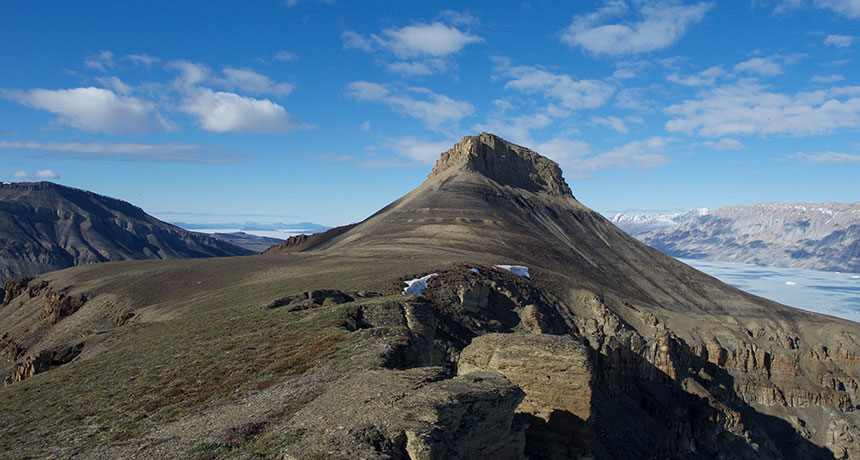
Lack of nutrients stalled rebound of marine life post-Permian extinction
Science News, August 2016Out-of-reach nutrients could help explain why life on Earth took so long to bounce back from the worst extinction of all time.
Out-of-reach nutrients could help explain why life on Earth took so long to bounce back from the worst extinction of all time.

A debate over when the gap between North and South America closed has opened a rift in the scientific community.
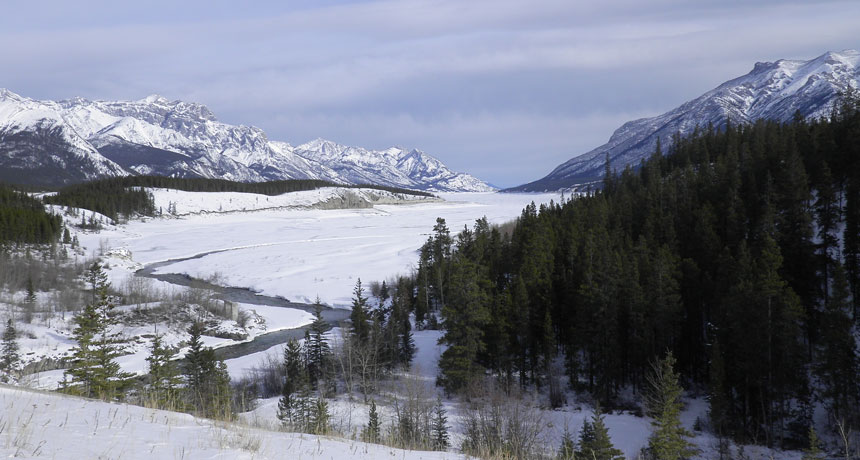
The first American pioneers could not have reached the New World the way most textbooks say they did, researchers conclude in a new study. An open corridor through the ice-covered North American Arctic was too barren to support human migrations before around 12,600 years ago, fossilized DNA evidence suggests.
The world is on the verge of a water crisis. Rainfall shifts caused by climate change plus the escalating water demands of a growing world population threaten society’s ability to meet its mounting needs. By 2025, the United Nations predicts, 2.4 billion people will live in regions of intense water scarcity, which may force as many as 700 million people from their homes in search of water by 2030. Those water woes have people thirstily eyeing the more than one sextillion liters of water in Earth’s oceans and some underground aquifers with high salt content.
A feature on emerging technologies such as graphene that could make desalination cheaper and more accessible. Cover story for issue.
The mighty monsoon winds that periodically bring rains that drench India first billowed around 12.9 million years ago, new research shows. The work provides the best look yet at the conditions that fostered the modern monsoon.
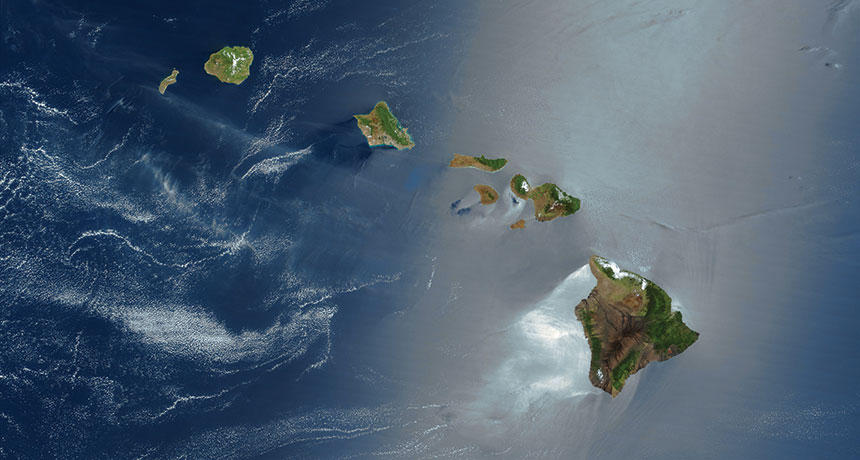
A three-way tectonic tango may have led to the birth of what is now the largest chunk of Earth’s crust.
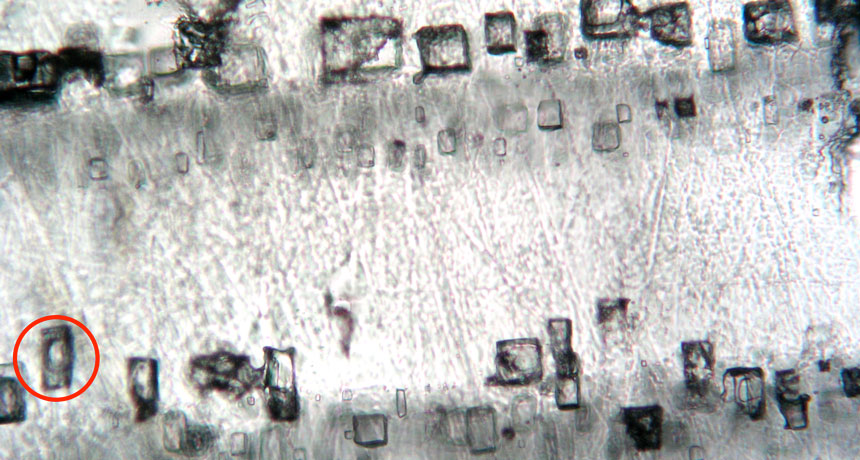
Whiffs of ancient air trapped in rock salt for hundreds of millions of years are shaking up the history of oxygen and life on Earth.
Adapted for Science News for Students.
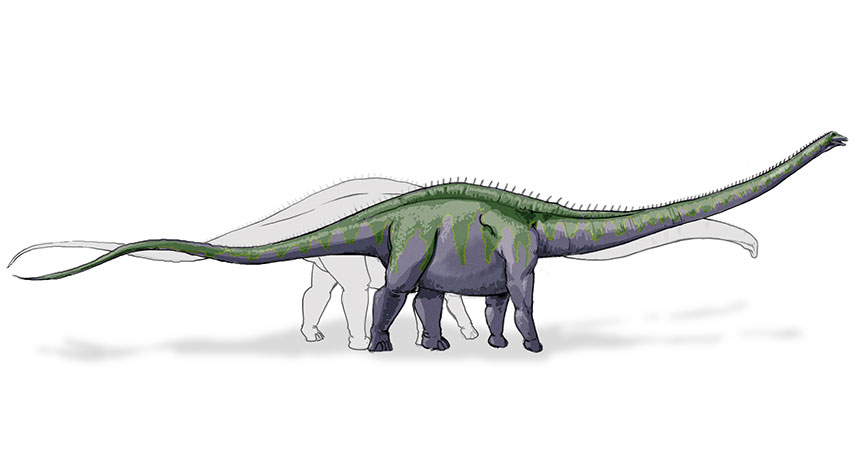
Two land bridges may have allowed dinosaurs to saunter between Europe and North America around 150 million years ago.
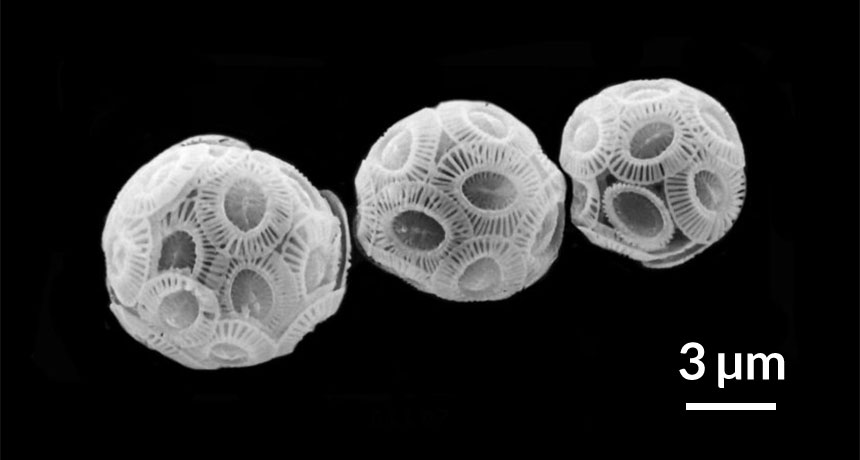
Armor-plated marine microbes surprised scientists a few years ago by recovering their shell-building prowess in levels of ocean acidification expected under future climate change. But those gains were short-lived, new research shows.
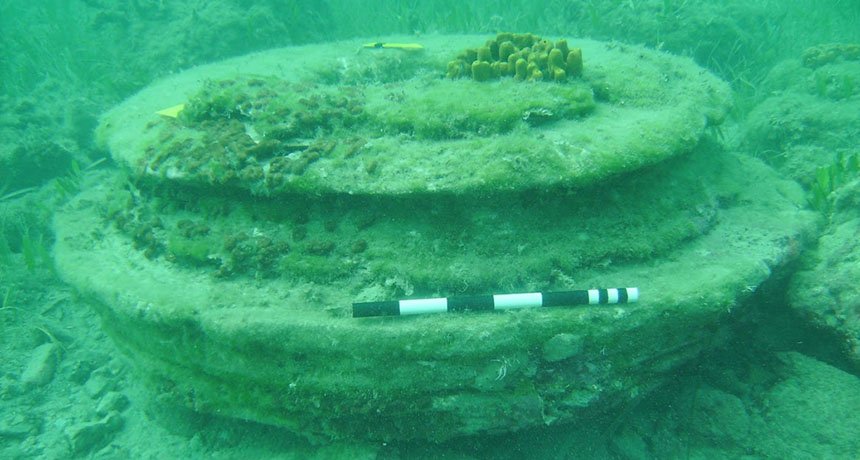
When snorkelers discovered what appeared to be ancient stonework off the coast of the Greek island of Zakynthos in 2013, archaeologists sent to the site thought the odd rocks might be the ruins of an ancient city. But among the columns, bagel-shaped rings and paving stone‒like rocks, they found no telltale pottery shards or other artifacts. Soon after, geochemist Julian Andrews of England’s University of East Anglia and colleagues dove down to the supposed ruins and collected samples.