U.S. weather has gotten more pleasant, but will soon worsen

Science News, June 2016

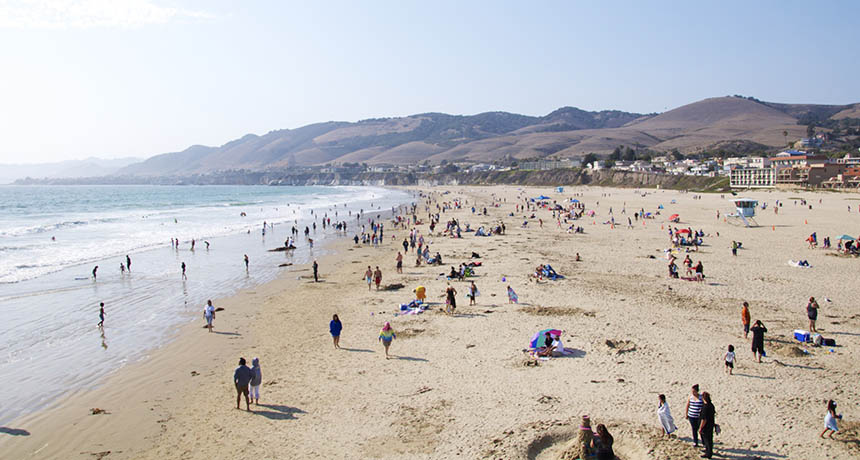
Americans have climate change to thank for a decades-long spate of milder winters. Around 80 percent of U.S. residents live in counties where the weather has become more pleasant over the last four decades (see map). That trend won’t last, however: Researchers predict in the April 21 Nature that 88 percent of Americans will experience noticeably worse weather by 2100 than they do today.

Pioneering geophysicist’s theory of peak oil still debated

Science News, May 2016

In the 1950s, long before the climate change debate began, geophysicist Marion King Hubbert presented research that made the oil industry queasy. Society needed to quickly wean itself off its dependence on oil, he concluded, or face dire consequences. Hubbert’s argument wasn’t motivated by the global climate impacts of fossil fuel burning, but rather by a bold prediction that U.S. oil production would soon peak and quickly taper off.

Climate-cooling aerosols can form from tree vapors

Science News, May 2016

The cooling effect of pollution may have been exaggerated. Fossil fuel burning spews sulfuric acid into the air, where it can form airborne particles that seed clouds and cool Earth’s climate. But that’s not the only way these airborne particles can form, three new studies suggest. Tree vapors can turn into cooling airborne particles, too.

Young sun’s super solar flares helped set early Earth up for life

Science News, May 2016

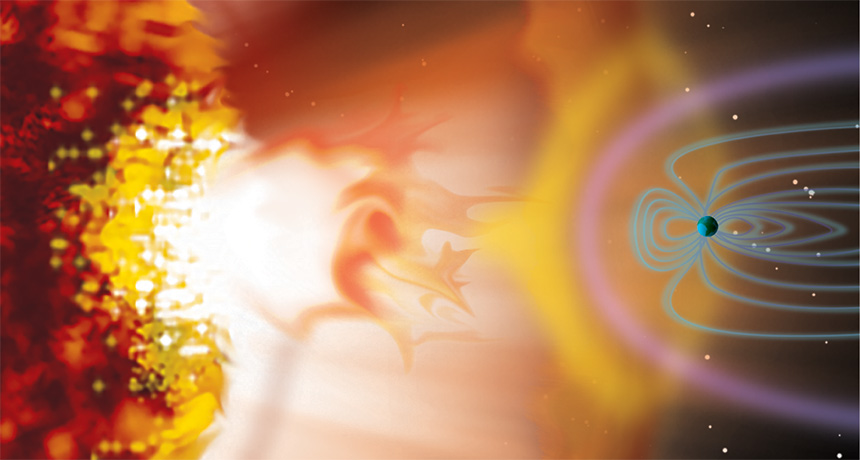
Solar outbursts may have supplied early Earth with the right stuff for life. Based on telescope observations of young sunlike stars, researchers estimate that “super” solar flares bombarded Earth with energetic particles at least once a day around 4 billion years ago. Collisions between the particles and molecules in Earth’s atmosphere produced nitrous oxide, a planet-warming greenhouse gas, and hydrogen cyanide, a crucial component for building DNA, the researchers propose May 23 in Nature Geoscience.

Ancient tsunamis reshaped Mars’ landscape

Science News, May 2016

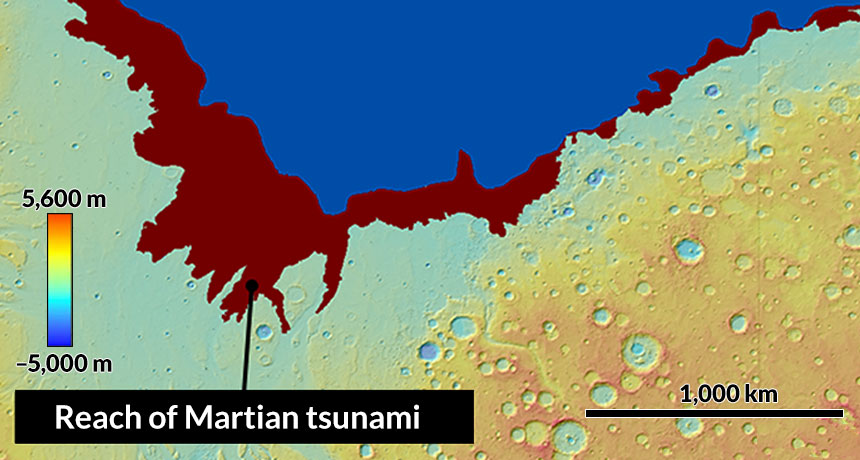
Massive meteor impacts may have once made waves on the Red Planet. The resulting tsunamis towered nearly as tall as the Great Pyramid of Giza and reshaped the coastline of an ancient Mars’ ocean, researchers propose.

The Arctic Ocean is about to get spicier

Science News, May 2016

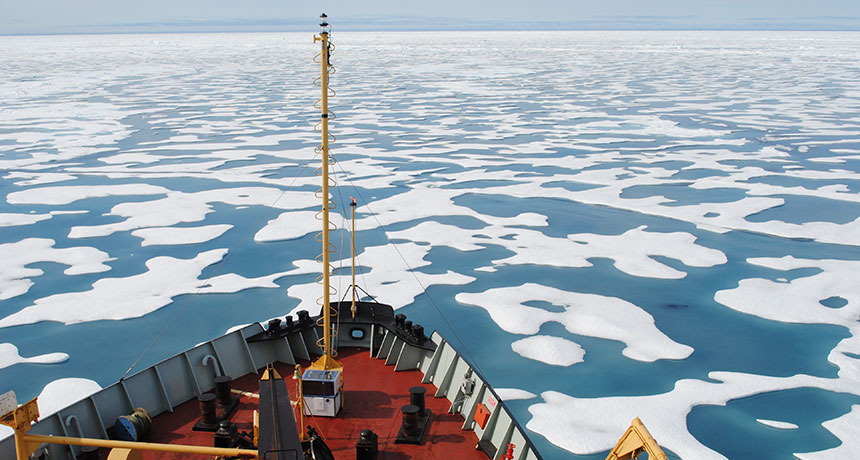
Relative temperature and salinity variations within seawater of the same density. Warmer, saltier ocean water is considered spicy while cooler, fresher water is minty. Climate change will spice up the Arctic Ocean, researchers report in the April Journal of Physical Oceanography.

Here’s where 17,000 ocean research buoys ended up

Science News, May 2016

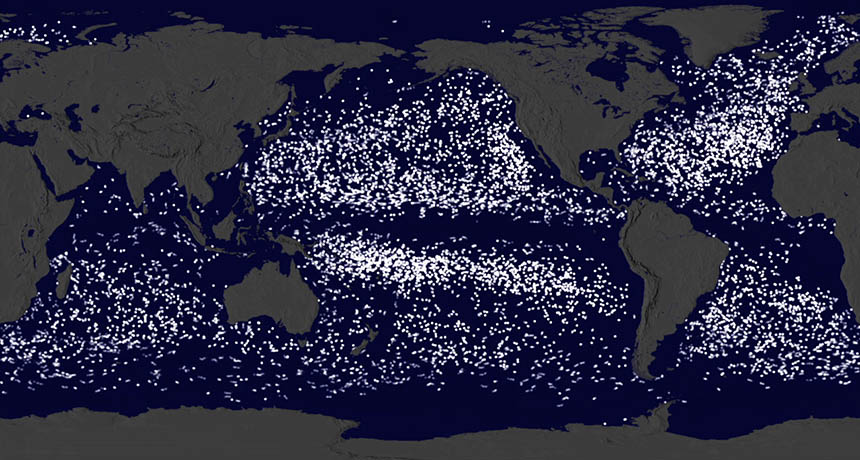
Garbage in, garbage out. But where does all that garbage go? In the oceans, floating bits of debris — everything from plastic bags to Legos — tend to ride along ocean currents to a common destination: one of five major whirling ocean gyres, also known as the ocean garbage patches. Researchers recently got a new look at these gyres thanks to a visualization that combined 35 years’ worth of data on another thing humans drop into the oceans: scientific buoys. The visualization was a finalist in the Data Stories competition sponsored by the American Association for the Advancement of Science. The winners were announced May 5.

When measuring lead in water, check the temperature

Science News, May 2016

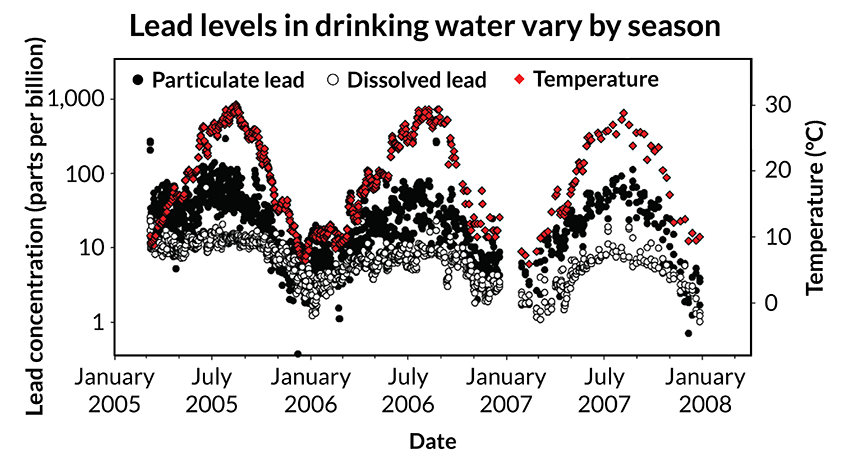
Lead contamination in drinking water can change with the seasons. Tracking lead levels in water pipes over several months, researchers discovered three times as much dissolved lead and six times as much undissolved lead in summer than in winter. The finding could help improve water testing, says study coauthor Sheldon Masters, an environmental engineer at Virginia Tech and Corona Environmental Consulting in Philadelphia.