Ocean heating doubles

Science News, January 2016

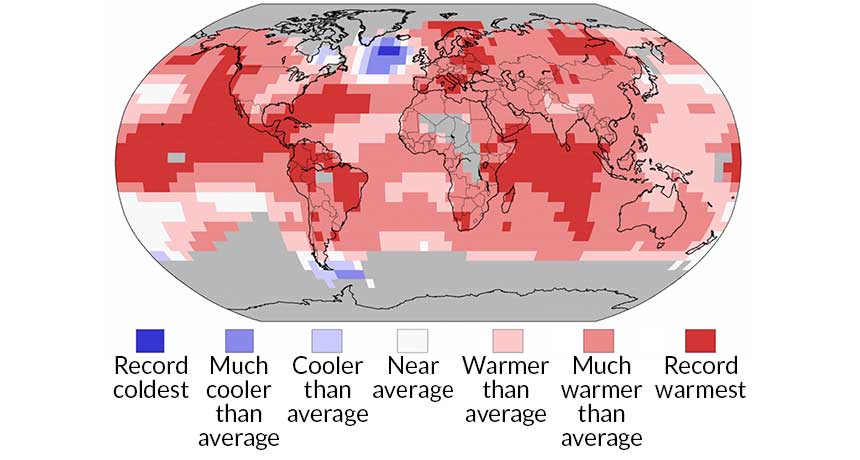
The ocean is taking heat. That’s the conclusion of a new study that finds that Earth’s oceans now absorb heat at twice the rate they did 18 years ago. Around half of ocean heat uptake since 1865 has taken place since 1997, researchers also report online January 18 in Nature Climate Change.

Five things science can (and can’t) tell us about North Korea’s nuclear test

Science News, January 2016

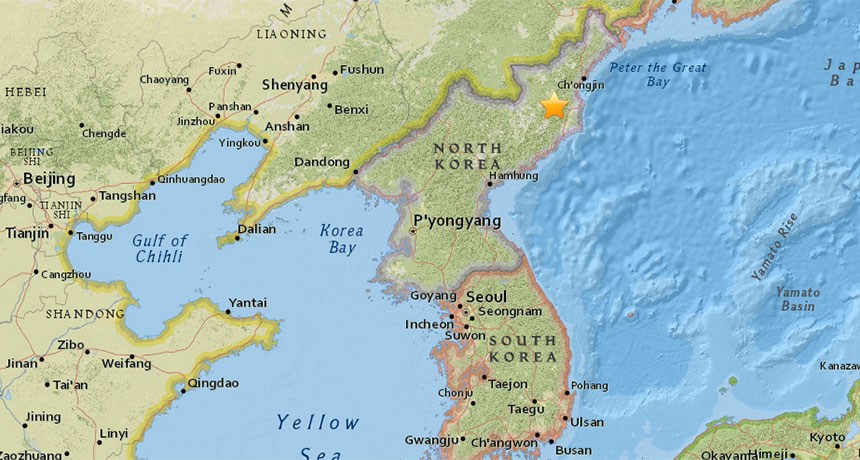
North Korea sent political shock waves around the world on January 6 when it claimed to have carried out a successful test of a hydrogen bomb, which, if true, would be a substantially more powerful and sophisticated class of weaponry than the country’s previous efforts. The underground test generated a magnitude 5.1 earthquake, according to the U.S. Geological Survey.

Solid inner, inner core may be relic of Earth’s earliest days

Science News, December 2015

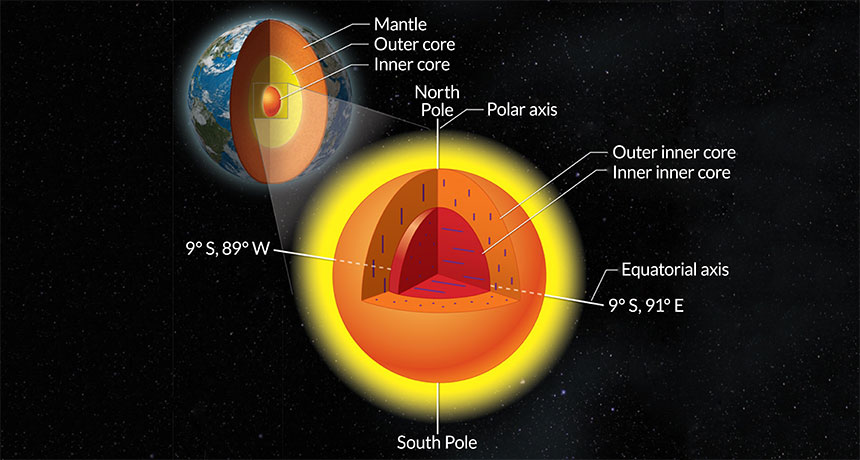
Earth’s deepest realm may be billions of years older than previously thought. New simulations of the planet’s formation suggest that the innermost part of the inner core solidified shortly after Earth’s assembly, rather than roughly 3 billion years later alongside the rest of the inner core.

Why some rainbows are all red

Science News, December 2015

Some rainbows don’t contain all the colors of the rainbow. The height of the sun above the horizon can yield arcs that contain only a fraction of the traditional ROYGBIV, researchers reported December 17 at the American Geophysical Union’s fall meeting.

Ancient Mars’ weather report: Continued cold and dry

Science News, December 2015

Visions of the ancient Red Planet as a warm, wet paradise are misplaced, new research suggests. Studying the Martian landscape, Harvard University planetary scientist Robin Wordsworth reasoned that the planet was generally a cold and dry place 3.8 billion to 3.5 billion years ago.